
What is grassroots research?
Grassroots research is research that grows from the ground up — from people who live the experiences being explored.
At Neuro Pirates, this means that participants are not treated as research subjects, but as co-creators of knowledge.
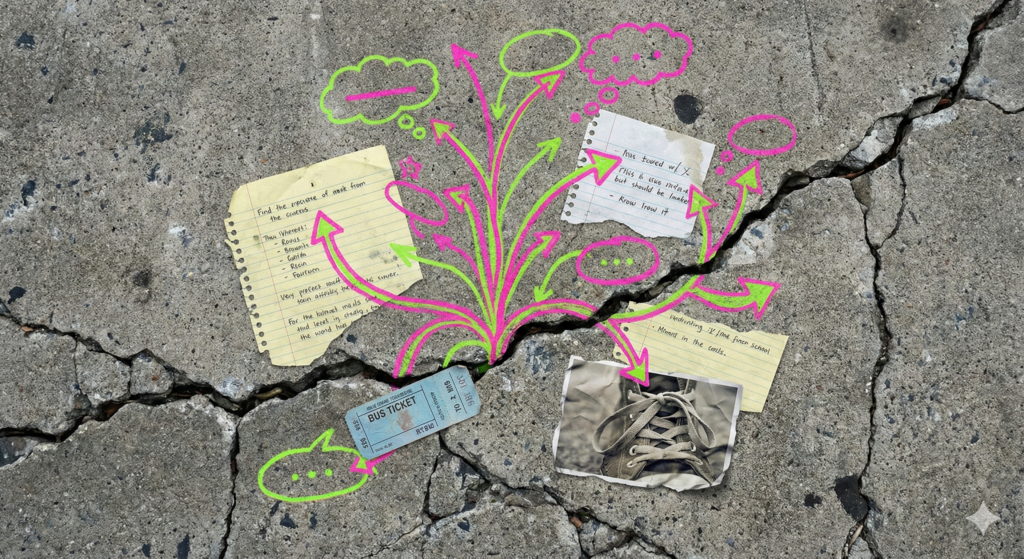
Rather than relying solely on questionnaires and standardized tests, we work with:
- participants’ reflections
- quotes and conversations
- bodily and sensory experiences from movement and shared activity
- artistic and personal expressions
We treat these experiences as valid forms of experiential data, because they provide access to lived realities that often remain invisible within traditional research designs.
Why does grassroots research make sense here?
Many neurodivergent people have extensive experience of not fitting into institutional communities — including school, work, and sports. Our research shows that the issue is not a lack of ability in the individual, but a lack of flexibility in the structures around them.
Drawing on ideas from Etienne Wenger, we understand participation as something that emerges within communities of practice, where meaning, identity, and learning develop through shared action.
When a community is safe and participant-led, new possibilities arise for experiencing:
- belonging
- competence
- being “good enough” without performance demands
Frontstage, backstage — and why Neuro Pirates matters
Using concepts from Erving Goffman, we explore how many neurodivergent people are required to remain constantly frontstage in a neurotypical society — where they:
- regulate their behavior
- put on masks
- manage others’ impressions of them
This creates mental strain and long-term exhaustion.
Within Neuro Pirates, we see how the community functions as a legitimate backstage space. Here, participants can step away from societal norms and expectations — and simply be themselves. Difference is no longer something to hide, but something that is shared and acknowledged.
What does our analysis “Sport and Neurodiversity – A Deeper Understanding” show?
Our analysis points to four key insights:
1. Experiences of rejection
Many participants had previously opted out of sports and communal activities due to stigmatization and negative experiences with systems and institutions.
2. Community over performance
When the focus shifts from performance to simply showing up, participants begin to experience their actions as meaningful — both for themselves and for the community as a whole.
4. Identity and becoming
Participants develop new narratives about themselves:
“I can take part.”
“I am good enough.”
“I belong.”
This is learning as becoming — not as adaptation.
Research with — not about
Neuro Pirates is a subcultural practice that emerges as a response to stigmatization and exclusion.
Grassroots research gives access to a space that is often closed to traditional research methods — and makes it possible to generate new knowledge by and for neurodivergent people.
PiratePodcast
You are invited into the intersection between Lea’s autistic, sensory-based neurodivergent perspective and Charlotte’s researcher’s gaze — carried by a shared belief that new knowledge emerges when we dare to create it together. Together, we sail under the Neuro Pirate flag.
The association was founded in May, and only a few weeks later we gained our beautiful Spaceship at Institut for X in Aarhus — an experimental community and expedition vessel for those who struggle to find space within society’s fixed structures.
[Video in Danish]